.svg)

Bemotrizinol Sunscreen: What It Is, How It Works, and When It Will Be Available
Bemotrizinol Sunscreen: What It Is, How It Works, and When It Will Be Available

Bemotrizinol Sunscreen: What It Is, How It Works, and When It Will Be Available
Bemotrizinol Sunscreen: What It Is, How It Works, and When It Will Be Available
Published on
June 9, 2026
Funding for content provided by Bayer®
Funding for content provided by Bausch + Lomb

In this article:
Thank you! Your submission has been received!
Oops! Something went wrong while submitting the form.
Jump to a section:
Thank you! Your submission has been received!
Oops! Something went wrong while submitting the form.
What is Bemotrizinol, and why did it take 25 years to get here?
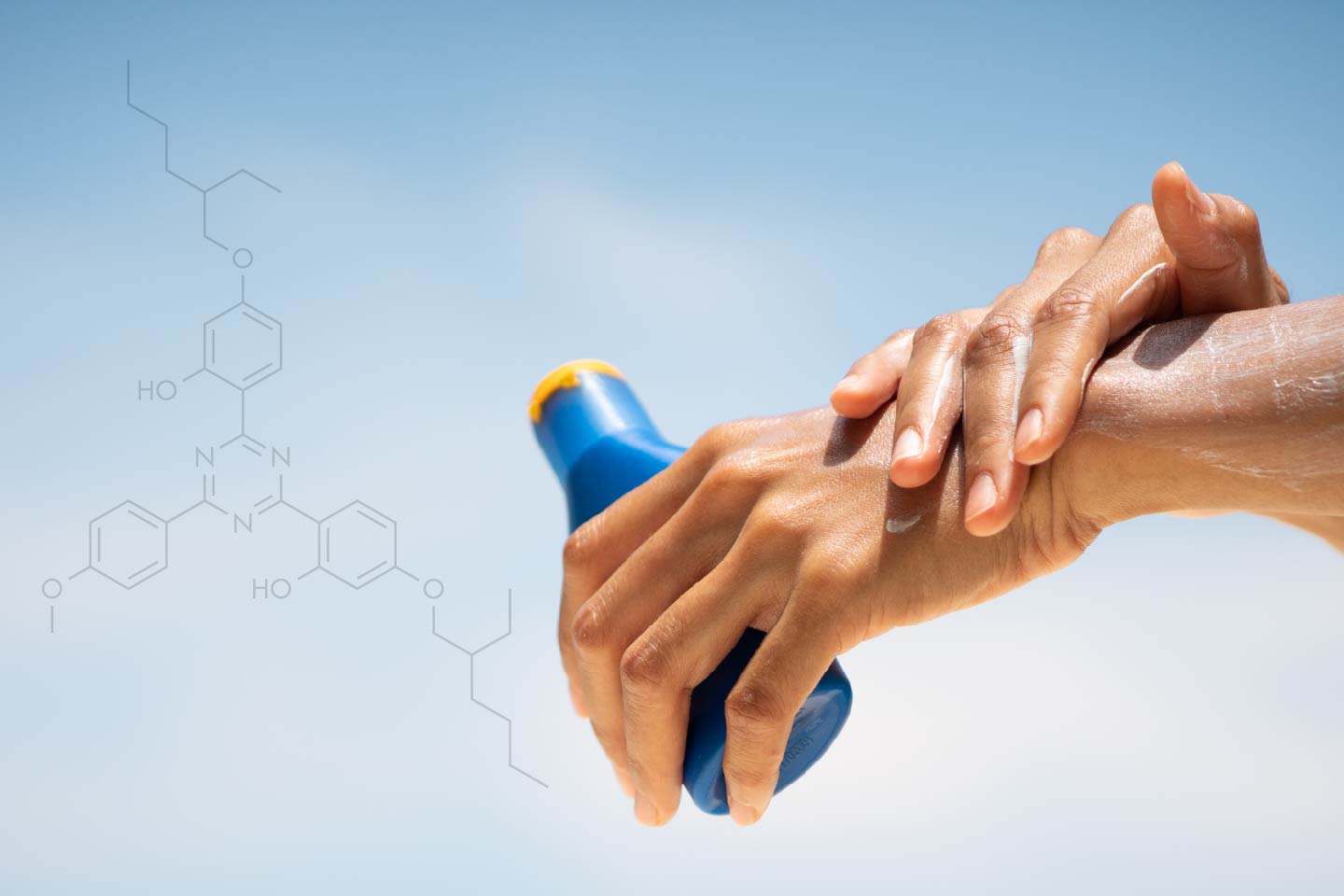
Bemotrizinol (also called BEMT or PARSOL® Shield) is a broad-spectrum sunscreen ingredient that has been used safely in Europe, Asia, and Australia for over 20 years. The U.S. Food and Drug Administration (FDA) recently approved it as the first new sunscreen ingredient available in the United States in more than 25 years.
So why did this take so long?
The U.S. regulates sunscreen ingredients as over-the-counter (OTC) medicines, not as cosmetics, because they make health claims (e.g., preventing sunburn and reducing skin cancer risk). This ensures a high standard of safety and effectiveness but makes adding new sunscreen ingredients slower and more complex than in other parts of the world. That’s why the approval of bemotrizinol (a new UV filter) is such a milestone!
Yes. Bemotrizinol is safe and has been used worldwide for over 20 years. The FDA recently reviewed the evidence supporting its safety and effectiveness and classified it as GRASE (Generally Recognized as Safe and Effective), which is the same top-tier safety classification as zinc oxide and titanium dioxide.
While bemotrizinol shares some of the consumer-friendly qualities people look for in mineral sunscreens, it is a distinct UV filter with a clear, non-whitening finish and low skin penetration.
One of the most common concerns people have about sunscreen ingredients is whether they get absorbed into the body. Bemotrizinol’s large molecular size helps limit absorption, and it is also a broad-spectrum UV filter that protects against both UVA and UVB rays. The addition of this filter to sunscreen products can offer enhanced sun protection, but will not necessarily replace the trusted sunscreens already on the market.
Important Update: Acetaminophen
There’s been a lot of talk recently about misleading claims that taking acetaminophen during pregnancy can cause autism. We’ve pulled together some FAQs and answers to help families.
Learn more and get the facts about acetaminophenOn the Bigger Sunscreen Safety Conversation: You may have seen content online claiming sunscreen is harmful. There is no scientific evidence that proves these claims. Excessive sun exposure is known to cause skin cancer, the most common cancer in the United States, and health authorities consistently emphasize that daily use of broad-spectrum sunscreen—along with other protective measures—can significantly reduce the risk of skin damage and skin cancer.
How does bemotrizinol work?
Think of bemotrizinol like a highly efficient “UV shield." It captures and neutralizes both UVA aging and UVB burning rays at the skin’s surface before they can do damage, and it keeps working even in strong sunlight. It also helps stabilize other sunscreen ingredients and boost overall SPF performance when used in combination with other UV filters (or sunscreen active ingredients).
A NOTE ABOUT DYE-FREE PRODUCTS: Dye-free medications and supplements are a great option for individuals who prefer or require products without dyes, such as those with allergies, sensitivities, or personal preferences. Importantly, both dye-containing and dye-free options are held to the same rigorous safety and quality standards. If you’re unsure which is right for you or your family, talk to your pharmacist or healthcare provider. They can help you choose the option that best suits your needs.
Who will benefit most from bemotrizinol?
Bemotrizinol is a brand-new option for everyone. Given how it works, it could be helpful for certain groups of people.
The "I've avoided using sunscreen because of white cast" crowd.
The visible white or gray film that some mineral sunscreens leave on skin is known as a “white cast”. It’s not a small annoyance, and it is not something every newer formula has solved. The white cast especially affects people with darker skin tones, who often find that mineral sunscreens are not cosmetically acceptable for daily wear.
Bemotrizinol is designed to be invisible on skin, going on completely clear regardless of skin tone. Dermatologists often say the best sunscreen is the one you will actually use every day, and for a lot of people, a noticeable white cast is the reason they do not regularly apply sunscreen. Bemotrizinol removes that barrier while offering broad-spectrum protection with the same top safety rating as zinc oxide and titanium dioxide.
For Kids and Families
Bemotrizinol is approved for children 6 months and older, giving parents another option to consider when choosing a sunscreen for their kids. For parents who have struggled to find a sunscreen their child will actually wear, more options mean more chances to find the right fit.
One thing the FDA is clear on: babies under 6 months old should still be kept out of direct sunlight rather than relying on any sunscreen. Instead, infants should be kept out of direct sunlight and protected with shade and protective clothing. As always, your dermatologist or pediatrician is the best resource for questions about sun protection for your child.
On Reef Safety: Bemotrizinol has a favorable environmental profile and does not easily degrade in the environment, making it a good option for those concerned about the potential ecological impact of personal care products.
When will bemotrizinol hit U.S. shelves?
Sunscreens with bemotrizinol are expected to reach U.S. store shelves in late 2026. When products do show up, here is what to look for on the label:
- The active ingredient list will say bemotrizinol (you may also see it referenced elsewhere on the packaging as PARSOL® Shield, the brand name used by the ingredient's manufacturer).
A Note on Your Current Sunscreen: The best sunscreen is the one you will use every day. Bemotrizinol simply adds a new option to help you maintain that routine. The basics never change:
- The product will include a claim of 'broad spectrum' (this protects against UVA and UVB rays), with an SPF of 30 or higher.
- Use broad-spectrum SPF 30 or higher and apply about 1 ounce (a full shot glass) to any areas of your face and body that are exposed.
- Reapply every two hours when you are outside (more often if you've been swimming, sweating a lot, or toweling off).
- Seek shade, especially between 10 AM and 4 PM when UV rays are strongest.
- Wear protective clothing like long-sleeved, breathable shirts, skirts or pants, a wide-brimmed hat, UV-blocking sunglasses, or clothing with an ultraviolet protection factor (UPF) of 50.
References:
- http://www.washingtonpost.com/wp-dyn/content/article/2005/09/30/AR2005093001998.html
- http://www.mayoclinic.com/health/drug-information/DR602285/DSECTION=precautions-
- http://www.drugs.com/drug-interactions/multivitamin.html
- http://www.naturemade.com/resource-center/articles-and-videos/immune-health/timing-your-vitamins
- http://www.nlm.nih.gov/medlineplus/druginfo/natural/912.html
- http://ods.od.nih.gov/factsheets/VitaminA-HealthProfessional/
- http://www.prevention.com/food/healthy-eating-tips/your-breakfast-giving-you-cancer
- http://ods.od.nih.gov/factsheets/Iron-HealthProfessional/
- http://www.ag.ndsu.edu/pubs/yf/foods/fn1607.pdf
- http://www.fda.gov/Food/DietarySupplements/UsingDietarySupplements/ucm110567.htm
Safe Use Tips & Takeaways
Heart Health Takeaways
What is fluoride?

Fluoride is a natural mineral found in water, soil, and some foods. It strengthens your enamel, repairs early signs of damage, and makes teeth more resistant to acids from bacteria and sugar.
Is fluoride toothpaste still the most effective option, or are fluoride-free formulas just as good?
Fluoride is still the gold standard for cavity protection. Fluoride-free options can clean your teeth, but they don’t offer the same enamel-strengthening power.
Is fluoride safe for daily use?
Yes. When used as directed, fluoride is safe and effective. It’s been trusted and recommended by major health organizations for over 70 years.
How does fluoride actually protect teeth?
It strengthens enamel, repairs early signs of decay through remineralization, and makes teeth more resistant to acids from bacteria and sugary foods.
Are there any risks to using fluoride long-term?
The main risk—especially for young kids—is swallowing too much, which can lead to mild fluorosis (faint white streaks on teeth). Using the right amount prevents this. For parents, supervise brushing to ensure kids spit out the toothpaste and don't swallow it.
At what age should kids start using fluoride toothpaste?
As soon as the first tooth appears!
* Under 3 years: a tiny rice-sized smear
* Ages 3–6+: a pea-sized amount
Supervise brushing so they don’t swallow it.
* Under 3 years: a tiny rice-sized smear
* Ages 3–6+: a pea-sized amount
Supervise brushing so they don’t swallow it.
Is fluoride still safe and recommended for kids with all the claims online?
Yes. A lot of online claims can be confusing, but decades of research show fluoride is safe and strongly recommended for cavity prevention when used properly.
How much fluoride should my child get from toothpaste?
Use age-appropriate amounts and brush twice a day. If your water isn’t fluoridated, ask your dentist about additional options.
How do I know which kids’ toothpaste claims are real and not just marketing?
Check for the ADA Seal of Acceptance and choose brands your dentist recommends.
Do fluoride-free or “natural” toothpastes protect kids from cavities?
They can help clean teeth, but they don’t provide the same cavity protection as fluoride toothpastes.
Are fluoride-free toothpastes just as effective for adults?
Not for cavity prevention. Fluoride-free toothpastes can help with cleaning and freshening breath, but they do not protect against cavities the way fluoride does. For adults, or anyone who is prone to cavities, fluoride toothpaste remains the most effective option for preventing tooth decay.
Do fluoride alternatives like nano-hydroxyapatite (nHAp) make a difference?
Yes—nHAp can help with sensitivity and early enamel repair. But it hasn’t matched fluoride’s cavity-prevention strength in studies.
How do I compare fluoride vs. fluoride-free options if I have sensitivity or enamel wear?
Fluoride is best for strengthening enamel and cavity prevention. nHAp may help with sensitivity and enamel repair. Some people benefit from using both in a balanced routine. Talk to your dentist about what's right for your specific needs.
Are whitening toothpastes safe to use with fluoride or fluoride-free products?
Most are safe but can be abrasive. Choose gentle formulas and avoid using them every single day—especially for kids.
What should I look for when choosing an OTC toothpaste?
Pick products with proven active ingredients (like fluoride), check for the ADA Seal of Acceptance, and avoid unnecessary additives or sweeteners.
Does fluoride affect hormones or the brain?
No credible scientific evidence shows fluoride at levels used in toothpaste or properly fluoridated water (0.7 mg/L) disrupts hormones or causes neurodevelopmental harm.
What should I do if my community stops adding fluoride to the water?
Use fluoridated toothpaste, consider fluoride rinses (for ages 6+), and talk to a dentist about fluoride supplements for kids (if needed).
Do fluoride supplements have side effects?
They’re safe when used under dental guidance and typically recommended for children in areas without fluoridated water or at high risk for cavities.
What’s the best way to make sure I’m getting enough fluoride?
Brush twice daily with fluoride toothpaste, drink fluoridated tap water if available, and ask your dentist for personalized advice if you’re cavity-prone.
Frequently Asked Questions about Bemotrizinol

This is some text inside of a div block.
Dig Deeper. Learn More.
Here are some other articles you might find helpful.