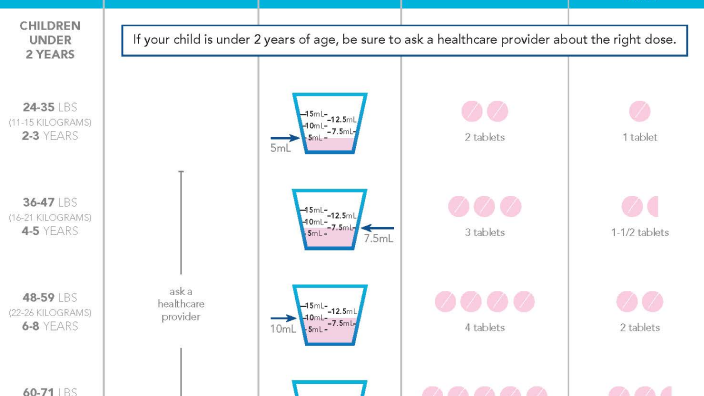
.svg)

Dosis De Acetaminofén Para Lactantes Y Niños
Dosis De Acetaminofén Para Lactantes Y Niños
Dosis De Acetaminofén Para Lactantes Y Niños
Dosis De Acetaminofén Para Lactantes Y Niños
Funding for content provided by Bayer®
Funding for content provided by Bausch + Lomb
In this article:
Thank you! Your submission has been received!
Oops! Something went wrong while submitting the form.
Jump to a section:
Thank you! Your submission has been received!
Oops! Something went wrong while submitting the form.
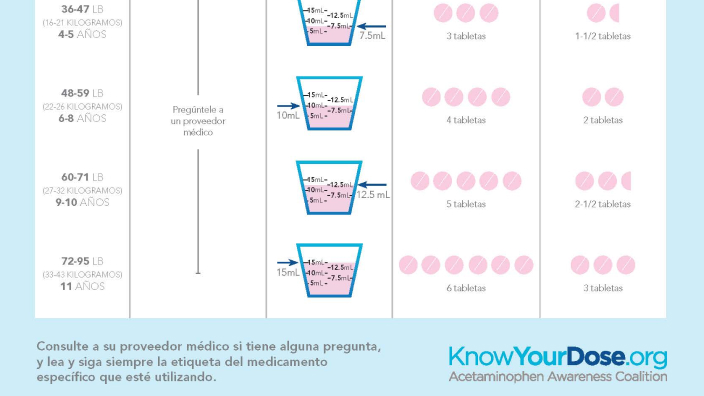
Tabla de dosificación de acetaminofén para lactantes y niños

Important Update: Acetaminophen
There’s been a lot of talk recently about misleading claims that taking acetaminophen during pregnancy can cause autism. We’ve pulled together some FAQs and answers to help families.
Learn more and get the facts about acetaminophenA NOTE ABOUT DYE-FREE PRODUCTS: Dye-free medications and supplements are a great option for individuals who prefer or require products without dyes, such as those with allergies, sensitivities, or personal preferences. Importantly, both dye-containing and dye-free options are held to the same rigorous safety and quality standards. If you’re unsure which is right for you or your family, talk to your pharmacist or healthcare provider. They can help you choose the option that best suits your needs.
References:
- http://www.washingtonpost.com/wp-dyn/content/article/2005/09/30/AR2005093001998.html
- http://www.mayoclinic.com/health/drug-information/DR602285/DSECTION=precautions-
- http://www.drugs.com/drug-interactions/multivitamin.html
- http://www.naturemade.com/resource-center/articles-and-videos/immune-health/timing-your-vitamins
- http://www.nlm.nih.gov/medlineplus/druginfo/natural/912.html
- http://ods.od.nih.gov/factsheets/VitaminA-HealthProfessional/
- http://www.prevention.com/food/healthy-eating-tips/your-breakfast-giving-you-cancer
- http://ods.od.nih.gov/factsheets/Iron-HealthProfessional/
- http://www.ag.ndsu.edu/pubs/yf/foods/fn1607.pdf
- http://www.fda.gov/Food/DietarySupplements/UsingDietarySupplements/ucm110567.htm
Safe Use Tips & Takeaways
Heart Health Takeaways
What is fluoride?

Fluoride is a natural mineral found in water, soil, and some foods. It strengthens your enamel, repairs early signs of damage, and makes teeth more resistant to acids from bacteria and sugar.
Is fluoride toothpaste still the most effective option, or are fluoride-free formulas just as good?
Fluoride is still the gold standard for cavity protection. Fluoride-free options can clean your teeth, but they don’t offer the same enamel-strengthening power.
Is fluoride safe for daily use?
Yes. When used as directed, fluoride is safe and effective. It’s been trusted and recommended by major health organizations for over 70 years.
How does fluoride actually protect teeth?
It strengthens enamel, repairs early signs of decay through remineralization, and makes teeth more resistant to acids from bacteria and sugary foods.
Are there any risks to using fluoride long-term?
The main risk—especially for young kids—is swallowing too much, which can lead to mild fluorosis (faint white streaks on teeth). Using the right amount prevents this. For parents, supervise brushing to ensure kids spit out the toothpaste and don't swallow it.
At what age should kids start using fluoride toothpaste?
As soon as the first tooth appears!
* Under 3 years: a tiny rice-sized smear
* Ages 3–6+: a pea-sized amount
Supervise brushing so they don’t swallow it.
* Under 3 years: a tiny rice-sized smear
* Ages 3–6+: a pea-sized amount
Supervise brushing so they don’t swallow it.
Is fluoride still safe and recommended for kids with all the claims online?
Yes. A lot of online claims can be confusing, but decades of research show fluoride is safe and strongly recommended for cavity prevention when used properly.
How much fluoride should my child get from toothpaste?
Use age-appropriate amounts and brush twice a day. If your water isn’t fluoridated, ask your dentist about additional options.
How do I know which kids’ toothpaste claims are real and not just marketing?
Check for the ADA Seal of Acceptance and choose brands your dentist recommends.
Do fluoride-free or “natural” toothpastes protect kids from cavities?
They can help clean teeth, but they don’t provide the same cavity protection as fluoride toothpastes.
Are fluoride-free toothpastes just as effective for adults?
Not for cavity prevention. Fluoride-free toothpastes can help with cleaning and freshening breath, but they do not protect against cavities the way fluoride does. For adults, or anyone who is prone to cavities, fluoride toothpaste remains the most effective option for preventing tooth decay.
Do fluoride alternatives like nano-hydroxyapatite (nHAp) make a difference?
Yes—nHAp can help with sensitivity and early enamel repair. But it hasn’t matched fluoride’s cavity-prevention strength in studies.
How do I compare fluoride vs. fluoride-free options if I have sensitivity or enamel wear?
Fluoride is best for strengthening enamel and cavity prevention. nHAp may help with sensitivity and enamel repair. Some people benefit from using both in a balanced routine. Talk to your dentist about what's right for your specific needs.
Are whitening toothpastes safe to use with fluoride or fluoride-free products?
Most are safe but can be abrasive. Choose gentle formulas and avoid using them every single day—especially for kids.
What should I look for when choosing an OTC toothpaste?
Pick products with proven active ingredients (like fluoride), check for the ADA Seal of Acceptance, and avoid unnecessary additives or sweeteners.
Does fluoride affect hormones or the brain?
No credible scientific evidence shows fluoride at levels used in toothpaste or properly fluoridated water (0.7 mg/L) disrupts hormones or causes neurodevelopmental harm.
What should I do if my community stops adding fluoride to the water?
Use fluoridated toothpaste, consider fluoride rinses (for ages 6+), and talk to a dentist about fluoride supplements for kids (if needed).
Do fluoride supplements have side effects?
They’re safe when used under dental guidance and typically recommended for children in areas without fluoridated water or at high risk for cavities.
What’s the best way to make sure I’m getting enough fluoride?
Brush twice daily with fluoride toothpaste, drink fluoridated tap water if available, and ask your dentist for personalized advice if you’re cavity-prone.
Dig Deeper. Learn More.
Here are some other articles you might find helpful.