.svg)

Reproductive Health
Reproductive Health
Funding for content provided by Bayer®
Funding for content provided by Bausch + Lomb
In this article:
Thank you! Your submission has been received!
Oops! Something went wrong while submitting the form.
Jump to a section:
Thank you! Your submission has been received!
Oops! Something went wrong while submitting the form.
Sexual Comfort
A number of problems can affect the ability to have or enjoy sex. In fact, about 4 in 10 women have problems with sex at some point during their lives. While sexual discomfort can require a consultation with your gynecologist or other healthcare provider, there are some OTC solutions to consider.
Personal Lubricants
Usually, sexual excitement leads to natural vaginal lubrication. But dryness and irritation may become a problem due to hormonal changes during menstruation and menopause, aging, or taking certain medications. A personal lubricant may help prevent itching, burning, chaffing, and other discomfort. You can buy lubricants online or at your local drugstore.
Common OTC personal lubricant brands:
- GoodSense®
- K-Y® Jelly
If you are considering having a baby, you have likely wondered how long it will take to get pregnant, when to have sex, and how often. For most couples, the odds that a woman will become pregnant are 15-25% in any given month. However, factors like age, irregular menstrual cycles, and medical conditions can affect a woman’s chances of becoming pregnant. There are several OTC products available to help plan and detect a pregnancy.
At-Home Ovulation Tests
At-home ovulation tests help to determine the time in a woman’s menstrual cycle when becoming pregnant is most likely. They work by detecting a rise in luteinizing hormone (LH) through a urine sample, as a rise in this hormone signals a woman’s ovary to release the egg. This is when pregnancy is most likely to occur.
Common at-home ovulation test brands:
- Clearblue®
- e.p.t.®
At-Home Pregnancy Tests
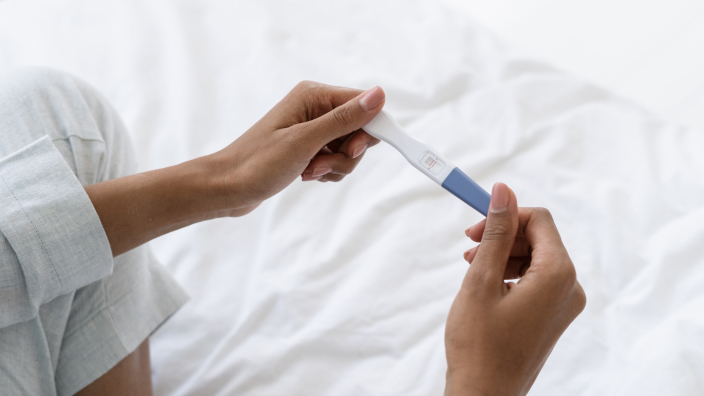
Perhaps your period is late, or maybe you are experiencing early pregnancy symptoms such as tender breasts. One way to find out if you are pregnant is by taking an at-home pregnancy test. These tests work by measuring your body’s level of human chorionic gonadotropin (hCG), a hormone that is only produced during pregnancy, through a urine sample. If the results are positive, you should make an appointment with your doctor to have the pregnancy confirmed. If the results are negative, wait another week and if you still haven’t started your period you should complete the test again.
Common at-home pregnancy test brands:
- Clearblue®
- e.p.t.®
- First Response™
Important Update: Acetaminophen
There’s been a lot of talk recently about misleading claims that taking acetaminophen during pregnancy can cause autism. We’ve pulled together some FAQs and answers to help families.
Learn more and get the facts about acetaminophenPregnancy Prevention
The World Health Organization (WHO) defines reproductive health as “a state of complete physical, mental, and social well-being” in all matters related to the reproductive system. This includes having a satisfying and safe sex life, with the freedom to decide if, and when, you want to have children (or get pregnant).
Understanding your options for pregnancy prevention is essential for your reproductive health. From male and female condoms to spermicides and emergency contraception, there are several OTC contraception (or birth control) options available to women who want to prevent pregnancy until they are ready.
- Male condoms are a widely used barrier method that not only prevents sperm from entering the vagina but also offers protection against sexually transmitted infections (STIs), although they have a typical use failure rate of 14-15%.
- Female condoms, which are inserted into the vagina, serve a similar purpose but have a slightly higher typical use failure rate of 21%.
- Spermicides, available in various forms like gels and films, are a barrier form of birth control that is placed deeper inside the vagina and assists in preventing pregnancy by stopping and killing sperm before they can reach an unfertilized egg. They contain nonoxynol-9 to kill sperm, but are less effective on their own, with a typical use failure rate of 28%. Instructions and effectiveness rates differ for each type of spermicide, so make sure to read and follow the label carefully before use.
- For those preferring an oral contraceptive, the progestin-only pill Opill® is now available OTC and is 98% effective when taken correctly, though it doesn’t protect against STIs.
- Emergency contraception, also known as the “morning-after pill” or “Plan B” emergency contraception, works by stopping the release of an egg from the ovary. It is most effective when taken within 72 hours (3 days) after unprotected sex or birth control failure and has an 87% effectiveness rate.
Each method has its benefits and considerations, so consult with a healthcare professional to determine the best option for your needs.
A NOTE ABOUT DYE-FREE PRODUCTS: Dye-free medications and supplements are a great option for individuals who prefer or require products without dyes, such as those with allergies, sensitivities, or personal preferences. Importantly, both dye-containing and dye-free options are held to the same rigorous safety and quality standards. If you’re unsure which is right for you or your family, talk to your pharmacist or healthcare provider. They can help you choose the option that best suits your needs.
References:
- http://www.washingtonpost.com/wp-dyn/content/article/2005/09/30/AR2005093001998.html
- http://www.mayoclinic.com/health/drug-information/DR602285/DSECTION=precautions-
- http://www.drugs.com/drug-interactions/multivitamin.html
- http://www.naturemade.com/resource-center/articles-and-videos/immune-health/timing-your-vitamins
- http://www.nlm.nih.gov/medlineplus/druginfo/natural/912.html
- http://ods.od.nih.gov/factsheets/VitaminA-HealthProfessional/
- http://www.prevention.com/food/healthy-eating-tips/your-breakfast-giving-you-cancer
- http://ods.od.nih.gov/factsheets/Iron-HealthProfessional/
- http://www.ag.ndsu.edu/pubs/yf/foods/fn1607.pdf
- http://www.fda.gov/Food/DietarySupplements/UsingDietarySupplements/ucm110567.htm
Safe Use Tips & Takeaways
Heart Health Takeaways
Always read the Drug Facts label carefully. The label tells you everything you need to know about the product, including the ingredients, what you are supposed to use it for, how much you should use, and when you should not use the product.
Do not use a condom past its expiration date. Never reuse a condom. This increases the risk of pregnancy and passing on STIs. Never use a male condom with a female condom, as this can cause tearing. Spermicide products are for vaginal use only and are not for rectal (anal) use. Do not use a spermicide product past its expiration date.
Emergency contraception products will not protect against STIs. Do not use emergency contraception if you have ever had an allergic reaction to levonorgestrel. Ask a doctor or pharmacist before use if you are taking efavirenz (HIV medication), or rifampin (tuberculosis treatment), or medication for seizures (epilepsy). These medications may reduce the effectiveness of levonorgestrel. If irritation or discomfort occurs when using a lubricant, discontinue use and consult a doctor or other healthcare provider.
If you have any questions on how to use reproductive health products, please consult a doctor or other healthcare provider. Keep all medicines out of the sight and reach of children.
What is fluoride?

Fluoride is a natural mineral found in water, soil, and some foods. It strengthens your enamel, repairs early signs of damage, and makes teeth more resistant to acids from bacteria and sugar.
Is fluoride toothpaste still the most effective option, or are fluoride-free formulas just as good?
Fluoride is still the gold standard for cavity protection. Fluoride-free options can clean your teeth, but they don’t offer the same enamel-strengthening power.
Is fluoride safe for daily use?
Yes. When used as directed, fluoride is safe and effective. It’s been trusted and recommended by major health organizations for over 70 years.
How does fluoride actually protect teeth?
It strengthens enamel, repairs early signs of decay through remineralization, and makes teeth more resistant to acids from bacteria and sugary foods.
Are there any risks to using fluoride long-term?
The main risk—especially for young kids—is swallowing too much, which can lead to mild fluorosis (faint white streaks on teeth). Using the right amount prevents this. For parents, supervise brushing to ensure kids spit out the toothpaste and don't swallow it.
At what age should kids start using fluoride toothpaste?
As soon as the first tooth appears!
* Under 3 years: a tiny rice-sized smear
* Ages 3–6+: a pea-sized amount
Supervise brushing so they don’t swallow it.
* Under 3 years: a tiny rice-sized smear
* Ages 3–6+: a pea-sized amount
Supervise brushing so they don’t swallow it.
Is fluoride still safe and recommended for kids with all the claims online?
Yes. A lot of online claims can be confusing, but decades of research show fluoride is safe and strongly recommended for cavity prevention when used properly.
How much fluoride should my child get from toothpaste?
Use age-appropriate amounts and brush twice a day. If your water isn’t fluoridated, ask your dentist about additional options.
How do I know which kids’ toothpaste claims are real and not just marketing?
Check for the ADA Seal of Acceptance and choose brands your dentist recommends.
Do fluoride-free or “natural” toothpastes protect kids from cavities?
They can help clean teeth, but they don’t provide the same cavity protection as fluoride toothpastes.
Are fluoride-free toothpastes just as effective for adults?
Not for cavity prevention. Fluoride-free toothpastes can help with cleaning and freshening breath, but they do not protect against cavities the way fluoride does. For adults, or anyone who is prone to cavities, fluoride toothpaste remains the most effective option for preventing tooth decay.
Do fluoride alternatives like nano-hydroxyapatite (nHAp) make a difference?
Yes—nHAp can help with sensitivity and early enamel repair. But it hasn’t matched fluoride’s cavity-prevention strength in studies.
How do I compare fluoride vs. fluoride-free options if I have sensitivity or enamel wear?
Fluoride is best for strengthening enamel and cavity prevention. nHAp may help with sensitivity and enamel repair. Some people benefit from using both in a balanced routine. Talk to your dentist about what's right for your specific needs.
Are whitening toothpastes safe to use with fluoride or fluoride-free products?
Most are safe but can be abrasive. Choose gentle formulas and avoid using them every single day—especially for kids.
What should I look for when choosing an OTC toothpaste?
Pick products with proven active ingredients (like fluoride), check for the ADA Seal of Acceptance, and avoid unnecessary additives or sweeteners.
Does fluoride affect hormones or the brain?
No credible scientific evidence shows fluoride at levels used in toothpaste or properly fluoridated water (0.7 mg/L) disrupts hormones or causes neurodevelopmental harm.
What should I do if my community stops adding fluoride to the water?
Use fluoridated toothpaste, consider fluoride rinses (for ages 6+), and talk to a dentist about fluoride supplements for kids (if needed).
Do fluoride supplements have side effects?
They’re safe when used under dental guidance and typically recommended for children in areas without fluoridated water or at high risk for cavities.
What’s the best way to make sure I’m getting enough fluoride?
Brush twice daily with fluoride toothpaste, drink fluoridated tap water if available, and ask your dentist for personalized advice if you’re cavity-prone.
Dig Deeper. Learn More.
Here are some other articles you might find helpful.